How to Test Your Reef Aquarium Water (and How Often)
Testing your water is how you know what is actually happening inside your reef, and a sensible testing routine is one of the habits that separates stable tanks from troubled ones. But it is easy to either test obsessively in ways that waste reagents and breed anxiety, or to test so rarely that problems sneak up on you. The right approach is a focused routine: the right parameters, at the right frequency, done accurately and logged over time. This guide lays out a practical reef water testing routine, which parameters to prioritize, how often to check each, and how to avoid the common testing mistakes.
- Test the parameters that matter on a regular schedule.
- Log results to spot trends before they become problems.
- Accurate technique matters as much as the kit itself.
What to Test and How Often
Not every parameter needs the same attention. Salinity and temperature should be checked frequently, often daily for temperature via a thermometer and weekly for salinity. Alkalinity, the fastest-moving major parameter, deserves the most frequent reagent testing, two or three times a week in a coral tank. Calcium, magnesium, nitrate, and phosphate fit a weekly to biweekly rhythm. pH can be monitored continuously with a probe or spot-checked. The chart below summarizes a sensible schedule. Tailor it to your tank: a demanding SPS system needs more frequent testing than a soft-coral nano, but everyone benefits from a consistent, deliberate routine rather than random spot checks.


Building a Routine
The value of testing comes from regularity. Pick a consistent day and time for your weekly tests, perhaps alongside your water change, so it becomes an automatic habit rather than an afterthought. Test the same way each time, with the same kit and technique, so your results are comparable. A steady routine means you are reading your tank’s vital signs on a schedule, which lets you notice when something is drifting. Sporadic testing, by contrast, catches problems only after they have grown. Building testing into your weekly rhythm transforms it from a chore into an early-warning system that quietly protects the tank.
Logging and Trends
A single test result is a snapshot; a log of results is the story. Record your readings each time, whether in a notebook, a spreadsheet, or an app, along with the date. Over weeks this log reveals trends, a slow climb in nitrate, a gradual fall in alkalinity, that no single test could show. Catching a trend early lets you adjust gently before it becomes a crisis, which is far easier than reacting to a parameter that has already swung. The discipline of logging turns your scattered test results into actionable insight, and it is one of the simplest upgrades you can make to your husbandry.
Testing Accurately
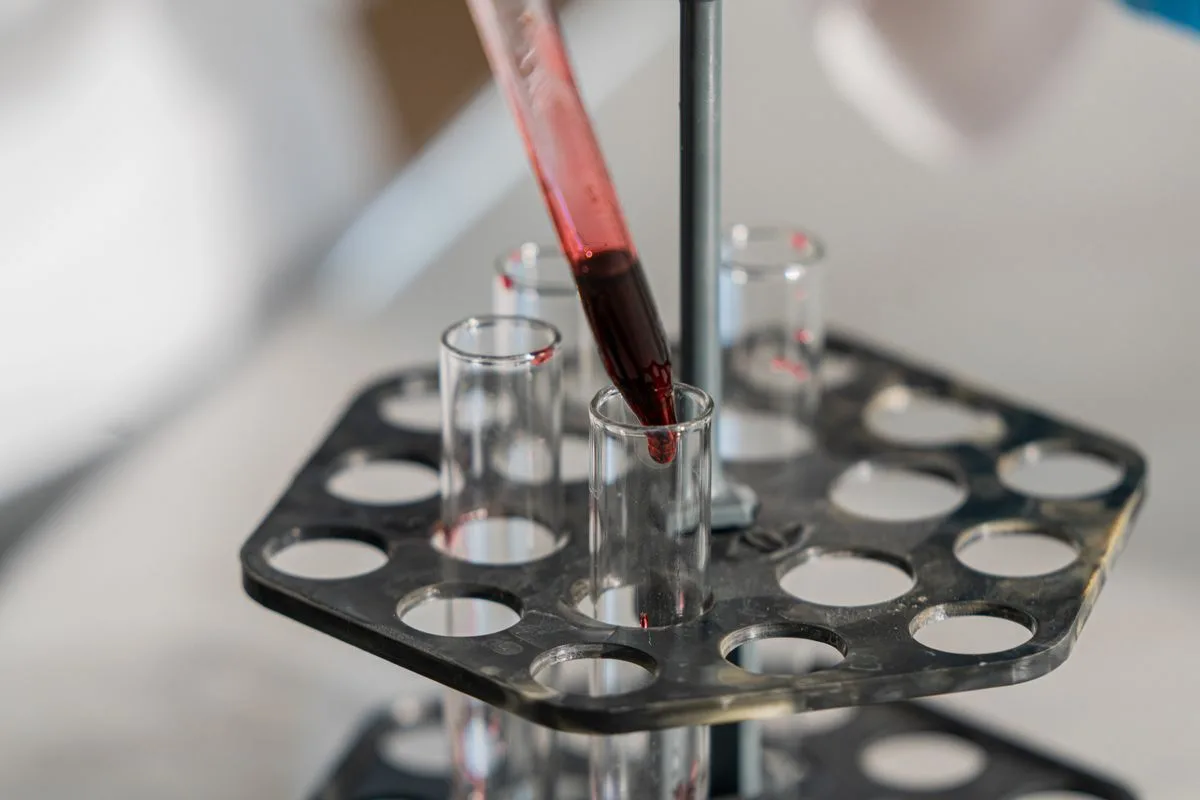
Good data depends on good technique. Follow each kit’s instructions exactly, since procedures vary; count titration drops carefully and consistently, rinse vials between tests to avoid contamination, and read colors in consistent, neutral lighting. Mind reagent expiration dates, because old reagents drift and produce misleading results. When a reading surprises you, retest before acting, and consider verifying a critical parameter against a reference solution periodically to confirm your kit is accurate. Careful, consistent technique ensures the numbers you log actually reflect your tank, so the decisions you base on them are sound rather than chasing artifacts of sloppy testing.
When a Reading Looks Wrong, Slow Down
Sooner or later a test will hand you a number that does not fit, and how you respond in that moment separates calm reef-keeping from a self-inflicted crisis. The first rule is to never make a dramatic correction off a single surprising reading. A lone odd result is far more likely to be a testing error than a genuine, sudden shift in a stable tank, and reacting hard to it can cause the very problem you were afraid of.
Retesting is the immediate next step. Running the test again, carefully, often resolves the surprise on its own, revealing the first result as a slip in technique, a stray bubble, a misread color, or a mismeasured drop. If the second test agrees with the first, you have something real to investigate; if it does not, you have saved yourself from chasing a phantom. Either way, confirmation before action is the habit to build.
Check the tool as well as the tank. An odd reading can point to expired reagents, a refractometer that has drifted out of calibration, or a kit stored somewhere too warm. Verifying against a reference solution or a second kit tells you whether the instrument or the water is at fault. Frequently the equipment is the culprit, and recognizing that spares you from adjusting a tank that was never actually out of range.
Context turns a number into a judgment. A reading that looks alarming in isolation may be perfectly consistent with your tank’s recent trend, or it may align with something you just did, like a water change or a dose. This is exactly why a written log is so valuable: it lets you ask whether a result fits the established pattern before you treat it as an emergency, and it reveals real trends that a single test cannot.
Once a reading is confirmed and put in context, respond with measured, gradual corrections rather than big swings. Bringing a parameter back into range slowly is almost always safer for livestock than a fast, forceful fix, because stability matters more than hitting a target instantly. Treating surprising results with patience, verification, and small adjustments keeps your testing a source of insight instead of a trigger for overreaction.
Test With Purpose
A focused testing routine is your window into the reef’s health. Test the parameters that matter at a frequency suited to your corals, build it into a consistent weekly habit, log every result to reveal trends, and use careful technique so the data is trustworthy. Done this way, testing stops being busywork and becomes the early-warning system that lets you catch and correct problems while they are still small.
Related reading
- Why Stability Beats Perfection in Reef Water Chemistry
- RO/DI Systems: Why Pure Water Matters for Reef Tanks
- Powerheads and Flow: Designing Water Movement in a Reef Tank
- Best Reef Test Kits: Accuracy You Can Trust