Beginner Corals: The Best First Corals for a New Reef Tank
Adding your first coral is the moment a fish tank becomes a reef. It is also where many newcomers stumble, buying delicate showpieces that melt away within weeks. The smart move is to start with corals that are genuinely forgiving: species that tolerate the slightly unstable water and imperfect lighting of a young tank, grow visibly to reward you, and bounce back from minor mistakes. Get a few of these established and thriving, and you build both confidence and a track record before moving on to anything demanding. These are the best first corals for a new reef tank, and why they work.
- Start with soft corals and hardy LPS, not SPS.
- Mushrooms and zoanthids tolerate beginner water swings.
- Let the tank mature two months before adding coral.
Why Beginner Corals Are Different
Corals vary enormously in how much stability they demand. The hardy beginner species evolved in shallow, variable lagoon conditions, so they shrug off the nutrient swings and lighting quirks that kill more sensitive corals. They also tend to be photosynthetic and low-maintenance, getting most of their energy from light rather than requiring careful feeding. Choosing from this group during your first months lets your tank mature, your dosing routine settle, and your confidence build, all while you still get the color and movement that make a reef captivating. The chart below ranks popular starter corals by difficulty.
Mushrooms and Zoanthids: Bulletproof Color
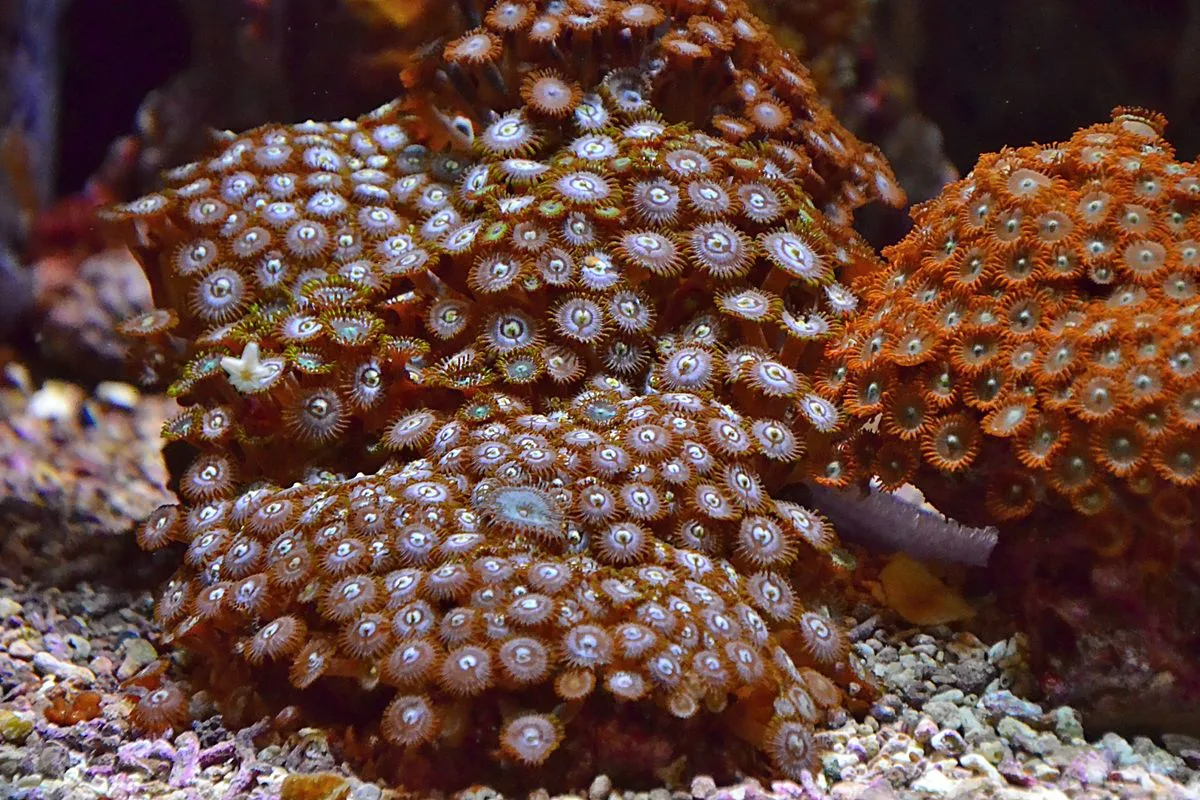
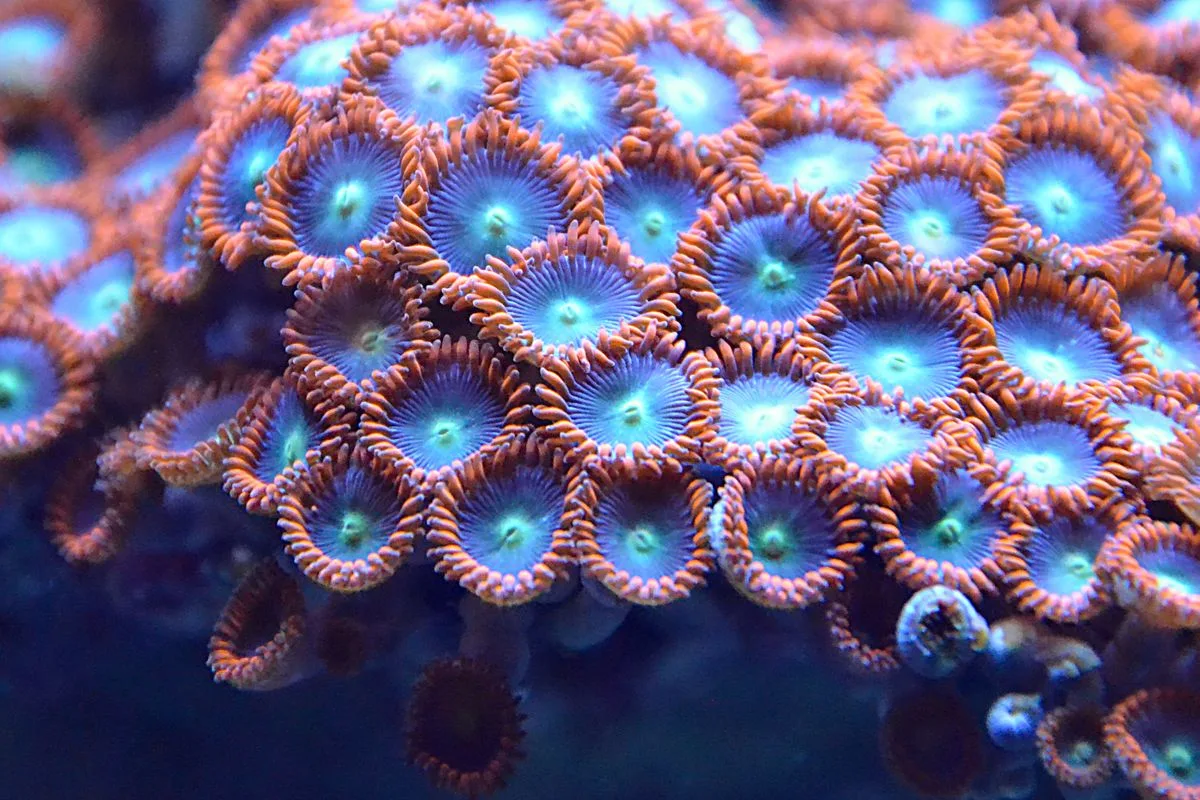
Mushroom corals, including discosoma and rhodactis, are about as forgiving as coral gets. They tolerate low light, modest flow, and imperfect water, and they multiply readily across your rock. Zoanthids and their cousins palythoa bring intense color in compact colonies and are similarly tough, though you should handle them with gloves because some carry palytoxin. Both of these prefer lower light and gentle flow, making them ideal for the shaded lower regions of a new aquascape. Place a few frags, give them weeks to attach and spread, and they quickly become the colorful backbone of a young tank.
Hardy LPS for Movement and Size
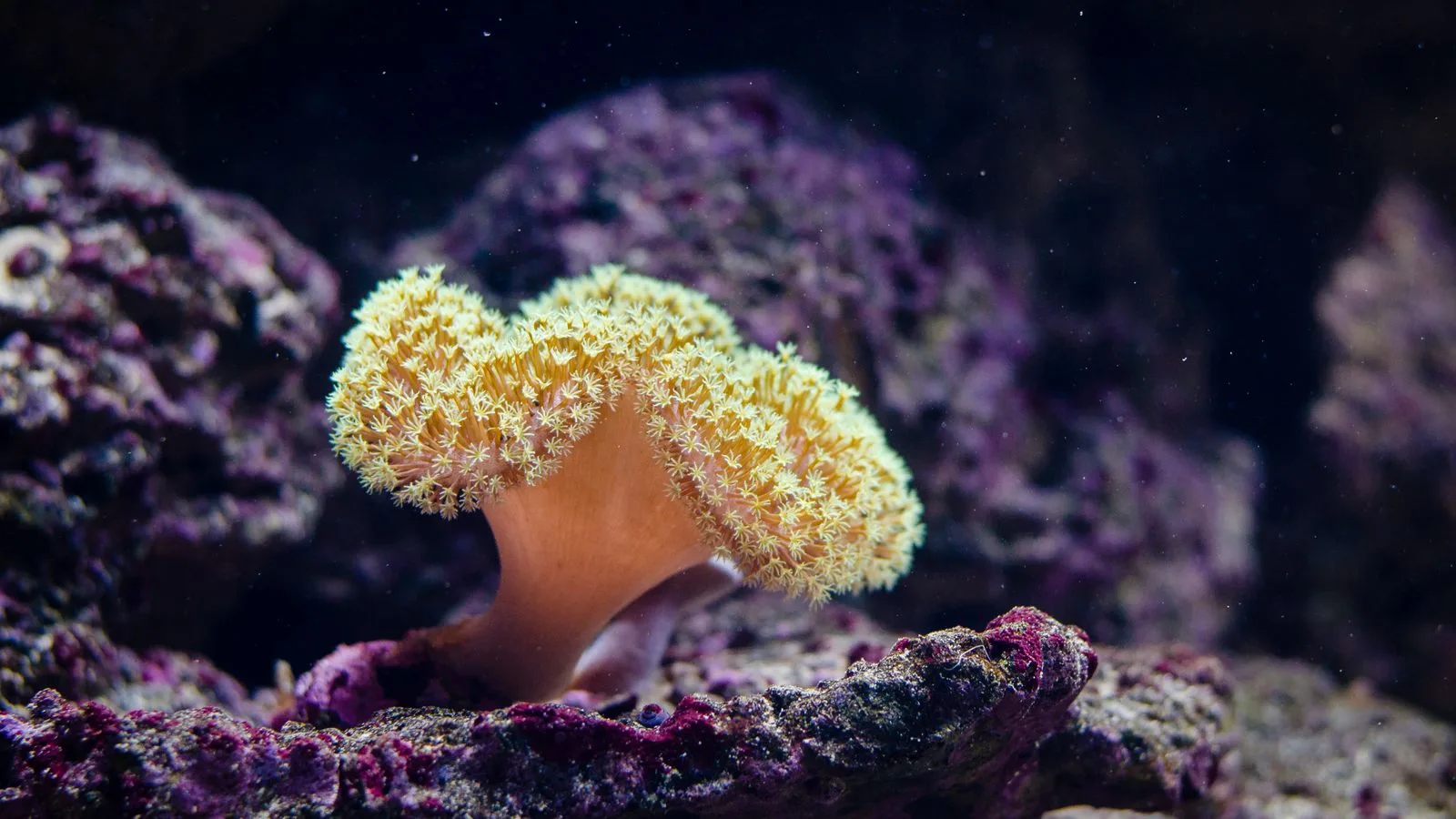
Once you want larger, flowing pieces, several large-polyp stony corals fit the beginner category. Euphyllia such as hammer and torch corals sway dramatically in moderate flow and are reasonably forgiving once your alkalinity is stable. Trumpet and candy cane corals form tidy clusters and tolerate a range of conditions. Duncan corals extend fleshy polyps and even accept direct feeding, which speeds their growth. These LPS corals do consume calcium and alkalinity as they build skeleton, so they are a good cue to start paying closer attention to those parameters, but they remain far less fussy than any SPS coral.
What to Avoid at First
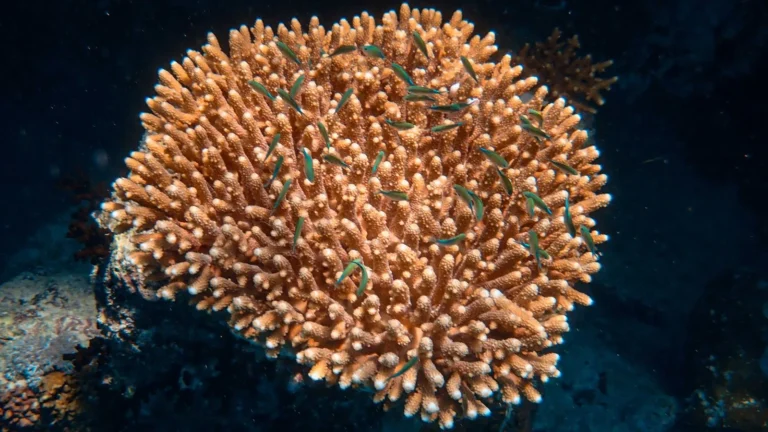
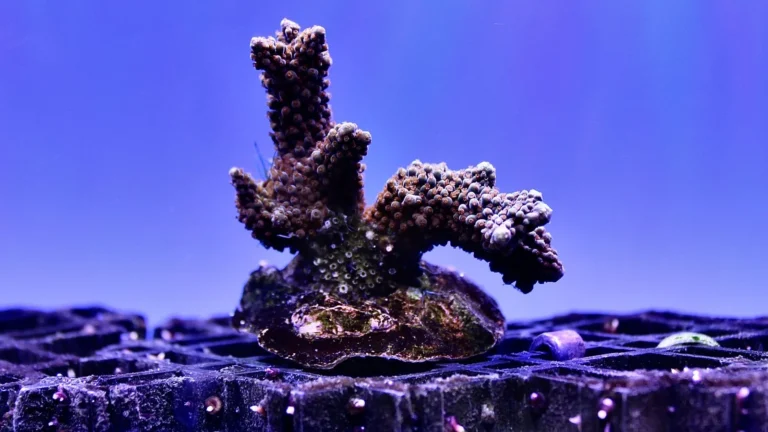
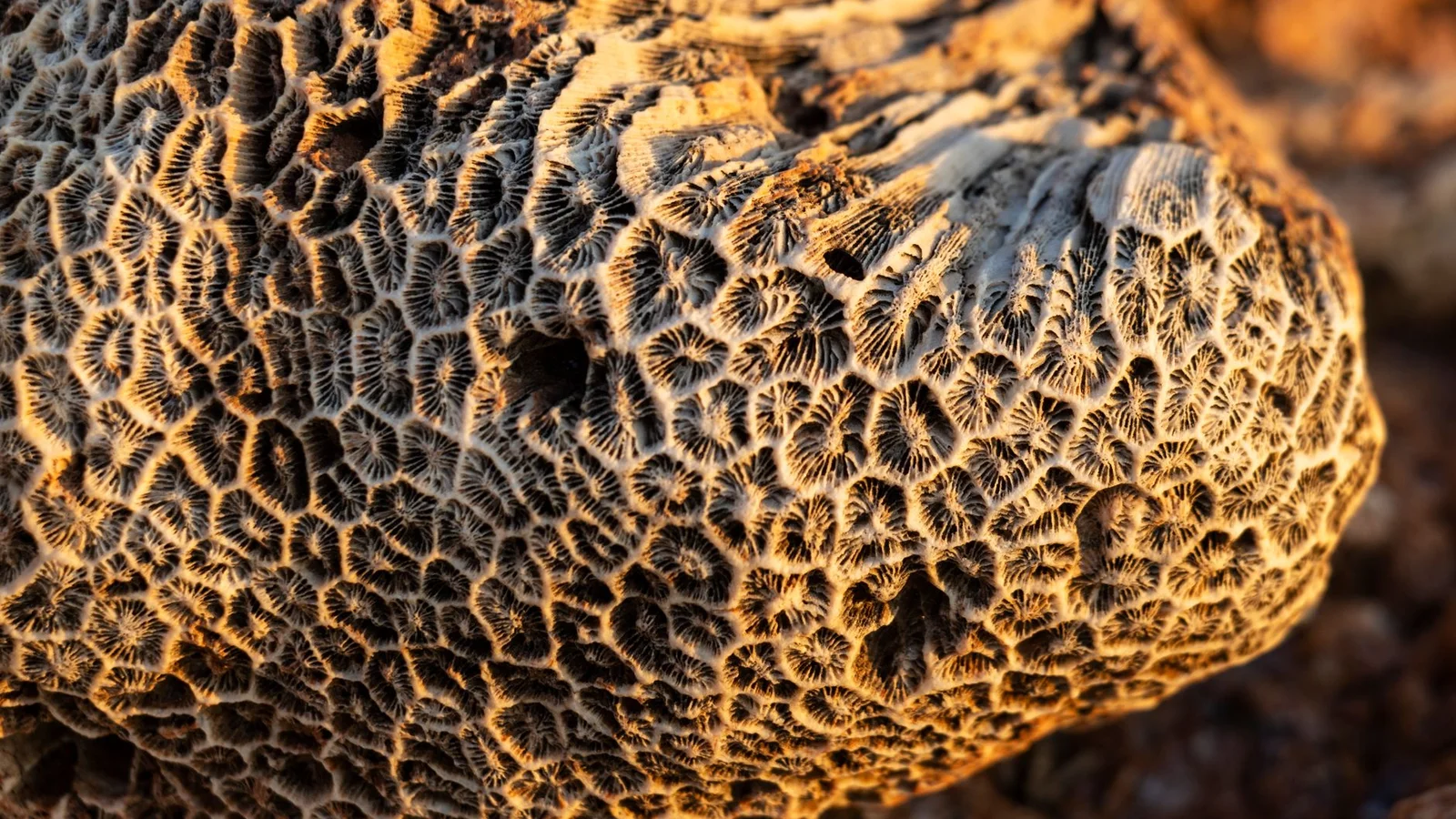
Two categories cause the most beginner heartbreak: small-polyp stony corals like acropora, and anything sold as a difficult or expensive showpiece. SPS corals demand rock-solid alkalinity, intense light, and strong flow that a young, still-settling tank simply cannot provide. Similarly, non-photosynthetic corals that require constant target feeding are a trap for newcomers. There is no shame in waiting; even experienced reefers lose SPS to instability. Master the hardy corals first, get six months of stable parameters under your belt, and the demanding species become a reasonable next step rather than an expensive lesson.
Inspecting a Frag Before You Buy
The healthiest first coral is one you chose carefully at the point of sale, so learn to read a frag before money changes hands. Look for full, extended tissue and good color under the store’s lighting. Polyps that stay clamped shut, tissue that looks thin or recessed at the edges of the skeleton, and any patches of exposed white skeleton on what should be a living coral are all warning signs. A little closure from being handled is normal, but a coral that never opens or shows receding flesh is telling you something.
Ask how long the piece has been in the store. A coral that has been settled in the shop’s system for a week or two has already survived shipping and acclimation, which makes it a far safer bet than something that arrived that morning. Healthy frags are also mounted cleanly on a plug or disc without slime, browning bases, or unwanted hitchhikers creeping across the plug. Give the plug a quick look for pest anemones, tiny snails, or flatworms before you bring anything home.
Buying from a reputable local shop or a known online vendor pays off, because reputable sellers quarantine and inspect their stock. When the frag gets home, a brief acclimation to your water and a coral dip to knock off pests turns a good purchase into a safe one. Starting with a clean, well-chosen, fully open frag stacks the odds in your favor and spares you the frustration of nursing a struggling coral through its first weeks in a brand-new tank that is still finding its footing.
When in doubt, buy frags rather than large colonies for your first purchases. A small frag is cheaper, acclimates to your conditions more readily, and represents a smaller loss if something goes wrong as you learn. It also grows out in your own tank, which means the coral adapts to your specific light and flow from an early age. Starting small and watching a frag thrive builds the confidence and the track record you need before investing in pricier or more demanding pieces.
Give each new piece a few weeks to settle before you judge it. A frag that sulks for a day or two after being moved is normal; what matters is the trend over the following weeks as it opens fully, extends its polyps, and begins to encrust or grow. Reading that slower signal keeps you from prematurely moving or fussing over a coral that simply needs time.
Build Confidence, Then Branch Out
The best beginner corals are the ones that survive your learning curve and grow while you figure out your routine. Stock mushrooms, zoanthids, and hardy LPS, give them stable water and patient placement, and watch them spread. Each thriving colony is proof your system is dialed in. Once these are flourishing and your parameters hold steady for months, you will have earned the right to try the showstoppers, with a much better chance of keeping them alive.
Related reading
- Budgeting a Reef Tank: True Cost of the First Year
- Adding Your First Fish: Stocking Order for a New Reef Tank
- Choosing the Right Tank Size for a Beginner Reef Aquarium
- Best Beginner Saltwater Fish for a New Reef Tank