Best LED Reef Lights for Every Budget
Lighting is where many reefers spend the most and understand the least. The right LED fixture grows healthy coral and brings out the fluorescent colors that make a reef glow, while the wrong one leaves corals brown and stunted or burns money on features you will never use. The good news is that capable reef lighting exists at every budget, from compact nano fixtures to full-spectrum lights that grow demanding corals. This guide explains what actually matters in a reef light, how to match a fixture to your tank and corals, and how to get great results without overspending.
- Match light intensity and spectrum to the corals you keep.
- Coverage and mounting height matter as much as raw power.
- You can grow great coral without buying the most expensive fixture.
What Actually Matters in a Reef Light
Three things determine whether a light grows coral well: intensity, spectrum, and coverage. Intensity, often discussed as PAR, is the amount of usable light reaching the coral; different corals want different levels. Spectrum is the mix of wavelengths, and reef corals thrive under a blue-heavy spectrum that also drives their fluorescent color. Coverage is whether the fixture spreads adequate light across your entire tank footprint rather than just a bright spot in the center. A light that nails all three for your specific tank and corals will outperform a more expensive fixture that is mismatched. Compare current reef LED fixtures with these factors in mind.
Matching Light to Your Corals
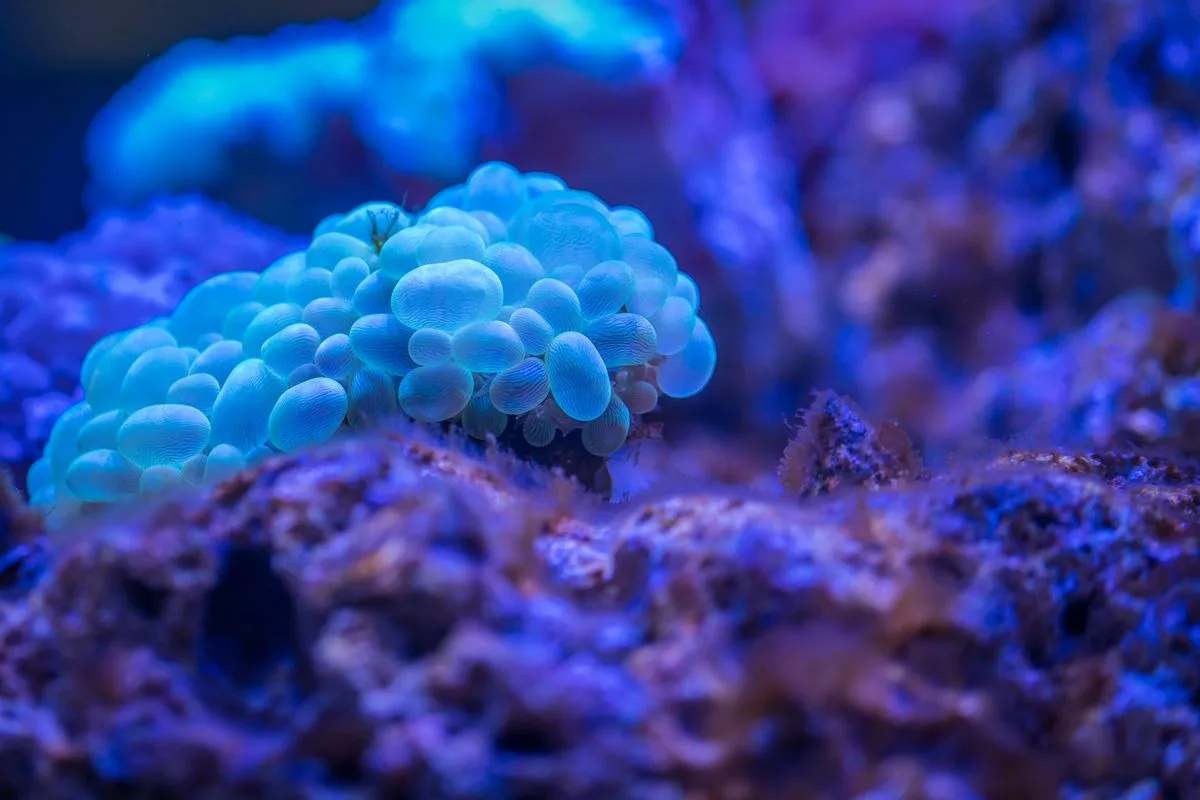
Your coral choices set your lighting needs. A tank of soft corals and LPS thrives under moderate light, so a mid-range fixture run at sensible intensity is plenty. A tank aiming for SPS, the acroporas and other small-polyp stony corals, demands high intensity and strong coverage, which is where premium fixtures earn their cost. Overlighting soft corals is as harmful as underlighting SPS, causing bleaching and stress. The chart below maps fixture tiers to the corals they suit. Decide what you want to keep first, then buy the light that delivers the intensity those animals need, no more and no less.
Coverage and Mounting
A common mistake is buying a powerful light that is too small to cover the tank, leaving bright centers and shadowed corners. Match the fixture’s coverage area to your tank’s length and width, using multiple units over longer tanks. Mounting height also shapes results: raising a fixture spreads light more evenly but reduces intensity, while lowering it concentrates light. Most fixtures perform best mounted several inches above the water with their intensity tuned rather than run at maximum from far away. Getting coverage and height right often does more for coral health than upgrading to a pricier light would.
Spending Wisely
You do not need the most expensive light to grow beautiful coral. Many mid-range fixtures grow soft corals and LPS superbly, and even SPS keepers succeed with sensible mid-tier lights run correctly. Premium fixtures buy you refined control, better coverage, sleek apps, and headroom for the most demanding corals, which matters for advanced tanks but is overkill for a beginner soft-coral garden. Spend according to your corals and ambitions, set a gentle acclimation ramp when corals are new, and tune intensity to your tank rather than chasing the highest numbers. Smart matching beats raw spending every time.
Controllability and Acclimating Corals to LEDs
One of the biggest advantages of modern LED fixtures is control, and learning to use it well is what separates a light that grows coral from one that bleaches it. Most reef LEDs let you program intensity, color channels, and a daily schedule, including gradual sunrise and sunset ramps. Those ramps are not just cosmetic; they spare fish and corals the jarring shock of lights snapping fully on or off, and they more closely mimic the gentle transitions corals evolved under.
When you install a new fixture or bring home a new coral, intensity acclimation is essential. LEDs can be deceptively powerful, and running a new light at full output immediately is a classic way to bleach corals that were doing fine under gentler lighting. Start a new fixture at a modest intensity, or raise it on a slow ramp over several weeks, giving the corals time to adjust their internal pigments. The same caution applies to any coral moving from a shop’s lighting into your tank.
A sensible photoperiod is part of the program too. Corals do not need light around the clock, and an excessively long day mainly fuels algae. A moderate window with a brighter midday peak and softer mornings and evenings gives corals the energy they need while keeping nuisance growth in check. Many controllable fixtures make it easy to build this curve once and let it run automatically day after day.
Beyond the basics, features like shimmer, individual color tuning, and app or controller integration let you fine-tune both the look and the function of your reef. Bluer spectrums make corals fluoresce and pop visually, while a balanced spectrum supports growth. The point of all this control is consistency: once you have dialed in an intensity and schedule that your corals are thriving under, the best thing you can do is leave it alone and let that steadiness work in your favor.
Do not overlook physical setup, either. Mounting the fixture at the manufacturer’s recommended height and ensuring it spreads light evenly across the whole tank prevents bright hotspots and dim corners that make consistent coral placement impossible. A well-positioned light at a sensible intensity will outperform a more powerful fixture that is mounted too low or aimed unevenly, and it makes the rest of your reef-keeping decisions easier.
Buy for Your Corals, Not the Spec Sheet
The best reef light is the one matched to your corals, your tank’s footprint, and your budget, delivering the right intensity and a coral-friendly blue spectrum with even coverage. Decide what you want to keep, buy a fixture that meets those needs, mount it well, and tune it rather than maxing it out. Do that and you will grow healthy, colorful coral without paying for performance you do not need.
Related reading
- Reef Tank Lighting Explained: PAR, Spectrum, and Photoperiod for Coral Growth
- Anemones in Reef Tanks: Are They Right for You?
- Invertebrates for Reef Tanks: Shrimp, Stars, and Urchins
- Temperature Control for Reef Tanks: Ranges, Chillers, and Safety